MOTS-c
Mitochondrial-Derived Peptide Research Compound
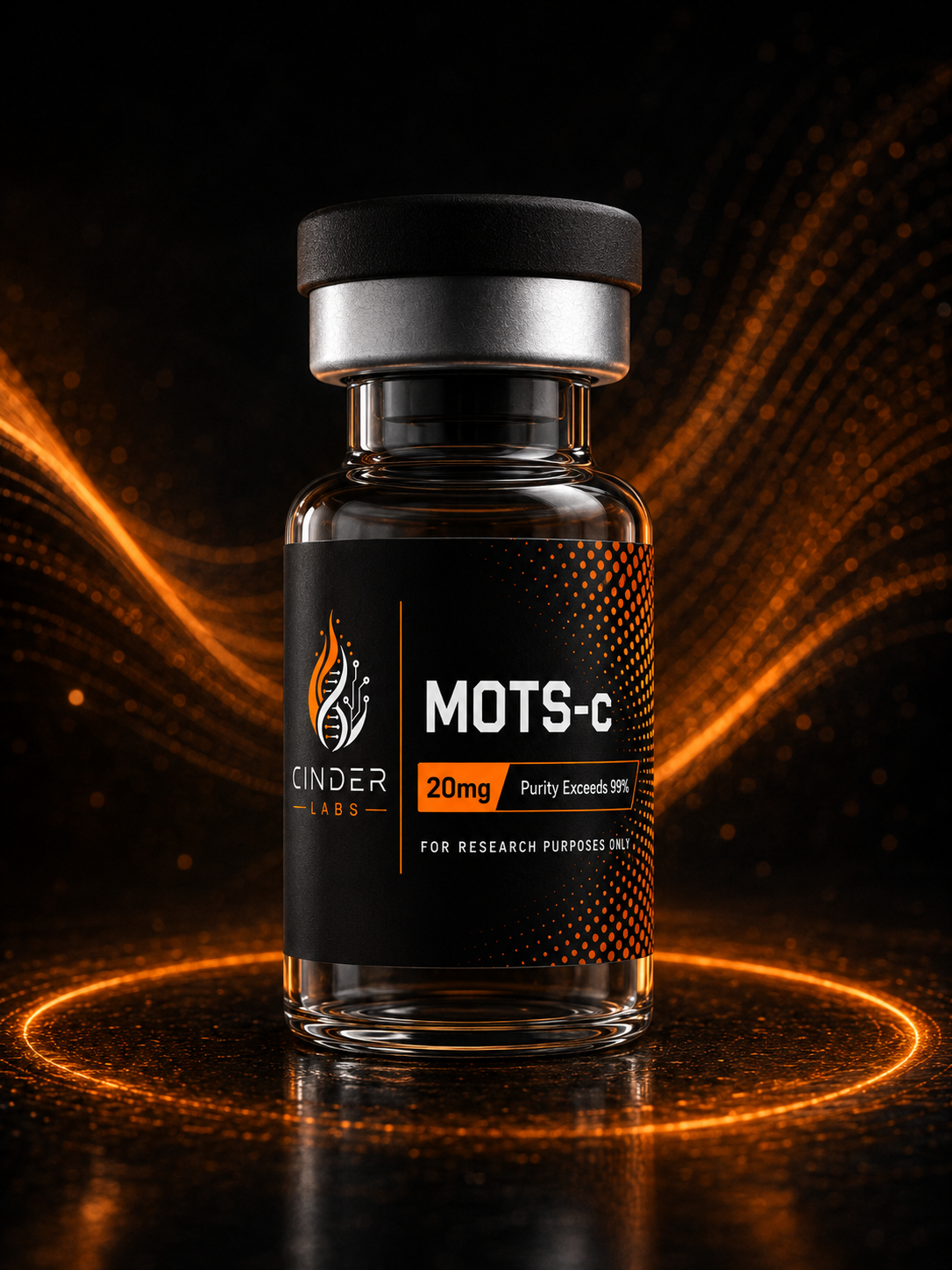
MOTS-c — 20 mg / vial
$119.00 $89.00 Launch Pricing
Launch Pricing — introductory rate in effect through our in-house batch-verification launch (see status below). Regular pricing applies after that.
Buy More & Save
- 1–2 vials$89.00 / vial
- 3–5 vials$84.55 / vial · 5% off
- 6–11 vials$80.10 / vial · 10% off
- 12+ vials$75.65 / vial · 15% off
Flat-rate shipping $12.00 — free on orders $250+.
Overview
MOTS-c is a 16-amino-acid peptide encoded within the mitochondrial genome. The research-grade material supplied here is manufactured synthetically for laboratory research use and studied as an in-vitro and rodent-model research tool in metabolic research contexts.
Research Context
This compound is supplied as an analytical and laboratory research material. Published scientific literature has characterized aspects of MOTS-c's molecular interactions and signaling behavior in experimental models, including its interaction with AMPK-related cellular signaling pathways. Cinder Labs does not represent this material as safe or effective for any human or veterinary application.
Laboratory Storage & Handling
Store the material according to the conditions specified in the applicable lot documentation and Certificate of Analysis. Handling, preparation and disposal should be performed only under appropriate laboratory procedures and institutional SOPs.